










Bau-Turbo 2025: Germany’s bold new law for faster residential construction
The law contains specific amendments to the Federal Building Code (BauGB) and aims to cut red tape in procedures, create housing quickly and give municipalities more room for manoeuvre. The key points:
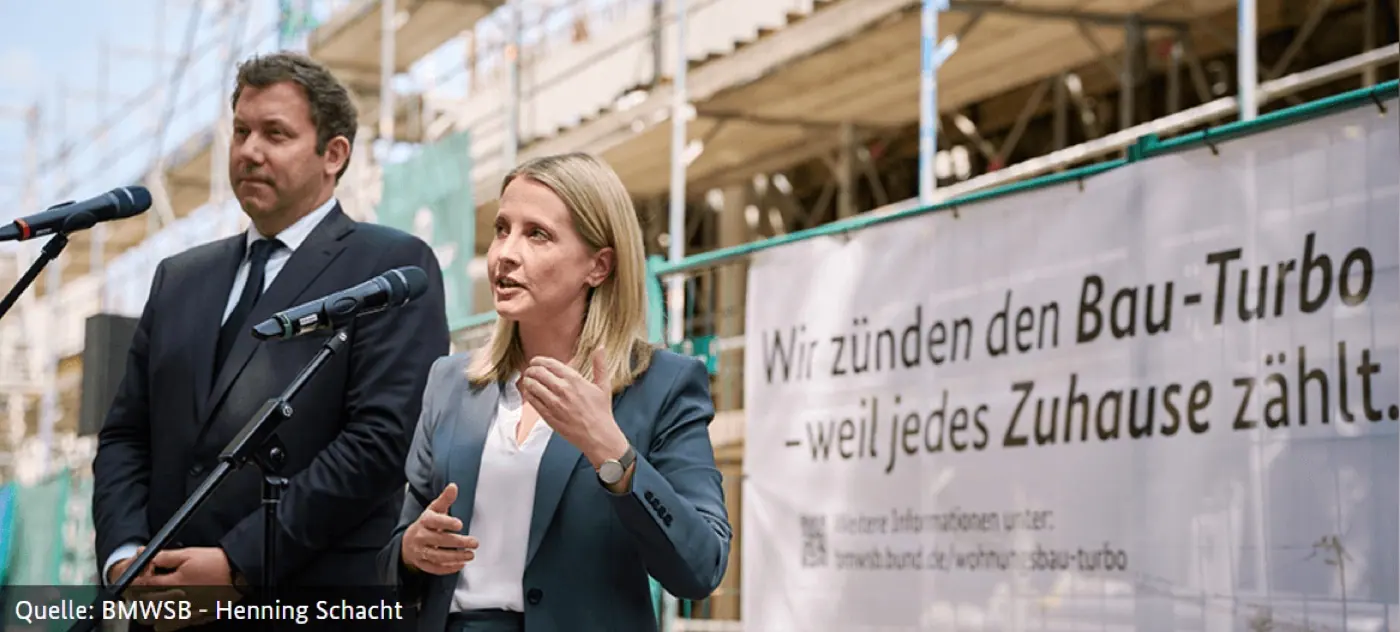
 Jonathan AlbroscheitFounder and CRO, arcneo
- Published
- 29 July 2025
- Reading time
- 7 minutes
What is in the new law: 8 structural game changers
The law contains specific amendments to the Federal Building Code (BauGB) and aims to cut red tape in procedures, create housing quickly and give municipalities more room for manoeuvre. The key points:
1. §246e BauGB: the legal anchor of the “turbo”
A new special provision allows municipalities, and only municipalities, to temporarily dispense with formal development plans in tight housing markets. If the municipal council actively decides to use the “Bau-Turbo” clause (Germany’s construction turbo law, §246e BauGB), projects such as new builds, conversions or added storeys can be approved within two months. This provision applies until 31 December 2030 and only in areas that have been officially designated as tight housing markets. Environmental and noise protection requirements remain binding. Public participation is optional and at the discretion of the municipality.
2. More flexible density: §31(3) BauGB
Cities get more legal leeway to exceed the prescribed density, for example by adding storeys, building in rear courtyards or densification, without changing the development plan. This allows entire streets to be densified quickly and with legal certainty.
3. Inner development via §34(3b) BauGB
Municipalities get more freedom to build in inner areas without a development plan, even if new buildings do not fit exactly into the surrounding structure. This opens up new opportunities for building on infill sites and for small plot developments.
4. Stronger tenant protection
To prevent social displacement, the “conversion protection” is extended by a further five years. In tight markets, this provision prohibits converting rental apartments into owner-occupied apartments. The aim is to preserve affordable rental housing and to stop investors from driving out existing tenants through sales.
5. Easier densification
So-called “infill development” is to become much easier. In areas that are already built up but have no development plan, municipalities will in future also be able to approve extensions, added storeys and renovations more flexibly.
6. Careful expansion at the edges
Because inner-city building land is becoming scarce, the law allows a careful expansion at the edges of towns, taking environmental and spatial compatibility into account. New development areas must directly adjoin existing settlements.
7. Mixed use and noise protection made pragmatic
At present, noise and emission limits often block residential construction near commercial areas. The new law allows municipalities to deviate from strict requirements as long as alternative noise protection solutions exist.
8. Stronger municipal authority
Municipalities decide for themselves whether and how they apply the Bau-Turbo. At the same time, the federal states can designate tight housing markets, which allows the use of special instruments, for example:
-
Pre-emption rights
-
Exemptions
-
Quotas and design rules
What makes the Bau-Turbo different from earlier housing reforms?
Unlike the “construction offensive” of the previous traffic-light coalition, which promised the construction of 400,000 apartments a year but failed because of bureaucracy and poor implementation, the Bau-Turbo 2025 relies on legally sound acceleration. It is not about funding pledges or wishful targets, but about concrete interventions in procedures and responsibilities.
Comparison table:
| Aspect | Construction offensive (2021 to 2024) | Bau-Turbo 2025 |
|---|---|---|
| Legal approach | Political target + funding instruments (e.g. KfW loans) | Direct amendment to the BauGB |
| Time to implement | Long delays, target clearly missed | < 2 months when the turbo is used |
| Municipal autonomy | Fragmented implementation, little room for manoeuvre | Full authority with federal support |
| Social and ecological balance | Unclear or contradictory goals | A balanced combination of building and preserving |
| Bundesrat (upper house) required? | Often required → legislative backlog | Not required → faster adoption |
| Results | Missed targets, loss of trust | Open, but clearly geared to acceleration |
Outlook: vote in the autumn and further debate
Mixed feedback from municipalities and the industry: cautious optimism meets questions of implementation
The law now goes to the Bundestag (the German parliament), where a final vote is expected in autumn 2025. First reactions are divided: some municipalities welcome the new freedoms, while others fear overload and unclear procedures. The real estate industry sees potential, but stresses the need for legal certainty and fast approvals in practice.
Since the Bundesrat does not have to give its consent, the political prospects of success are better than for earlier reforms. With €2.5 billion in federal funds a year for implementation, digitalisation and citizen services, the Bau-Turbo could become a test case for rapid urban redevelopment in a mature democracy.
Conclusion: a turning point for the real estate world?
The Bau-Turbo 2025 marks a turning point: away from declarations of intent, towards implementation grounded in law. The combination of speed, municipal self-responsibility and social protection could unblock residential construction for good. Whether municipalities seize this chance, and whether citizens will soon feel it, remains to be seen.
For developers like arcneo, which rely on serial timber construction, impact investments and regional partnerships, the Bau-Turbo is a historic opportunity. By drastically shortening planning processes and promoting inner-city densification, the reform is an ideal fit for modular, climate-positive housing models. If implemented consistently, it could take dozens of projects out of the holding pattern and deliver sustainable housing for exactly the groups that need it most.
Jonathan Albroscheit writes for arcneo Insights about the housing market, regulation and the team.
Read more
More Insights
Schneller-Bauen-Gesetz in Berlin: new opportunities for residential construction and urban development?
According to the Senate Department’s estimate, the capital alone will be short of around 200,000 apartments by 2030.
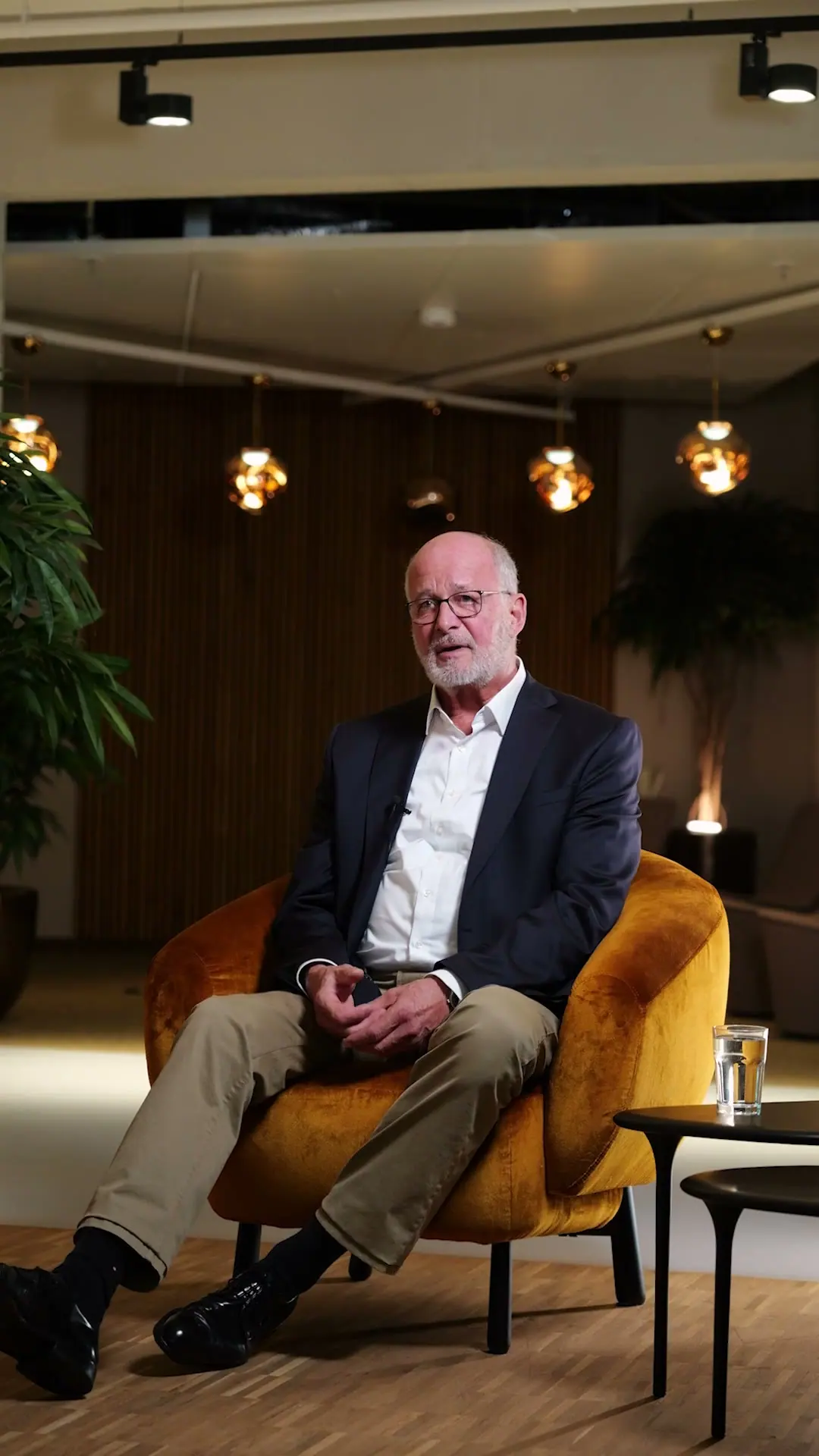
Meet the Team: Volker Bredler, project development with principles
More than 40 years of experience in project development, including four decades at Aldi Süd. A conversation about responsibility and clear principles.
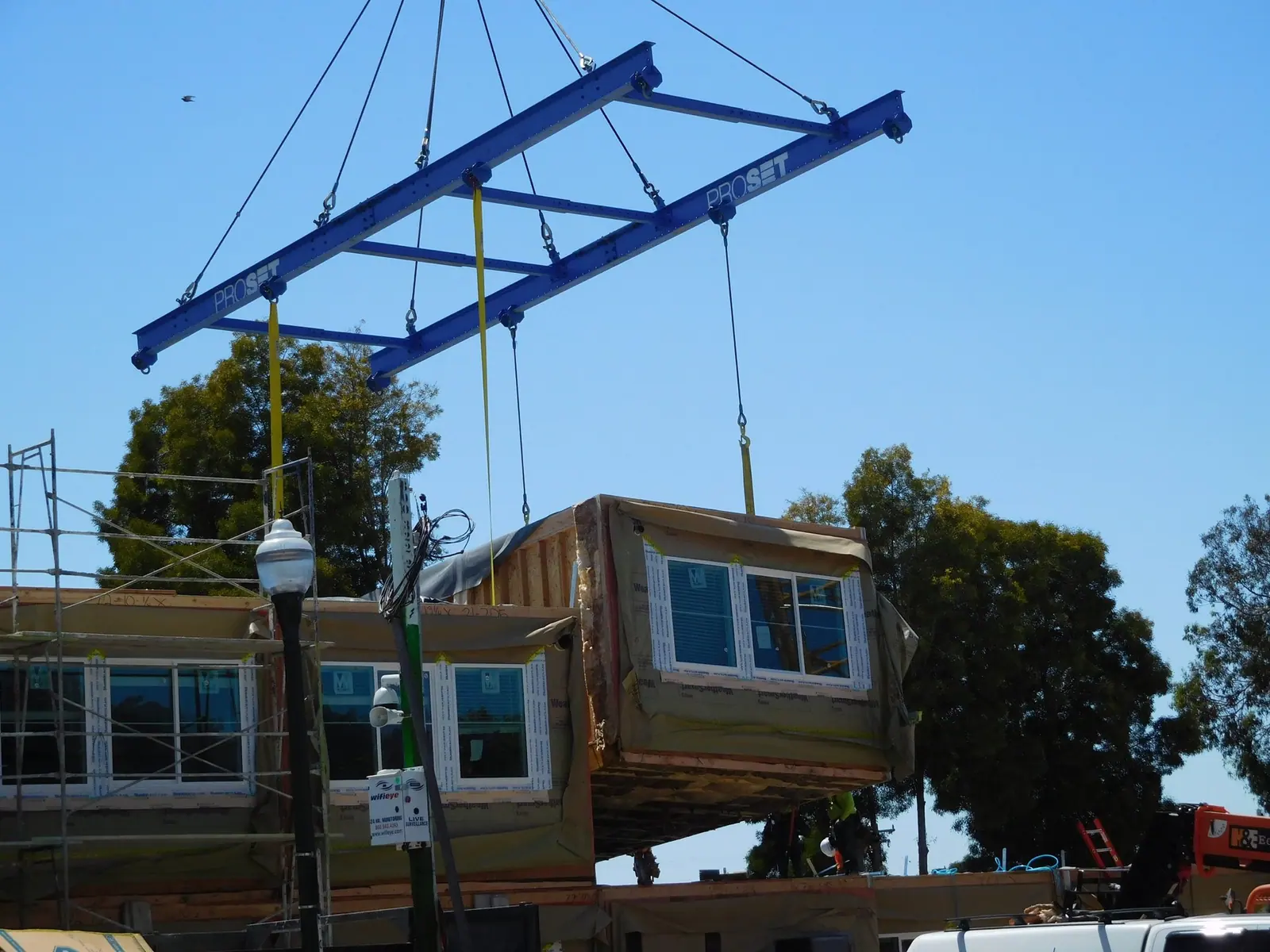
Serial and modular construction: the difference
Serial construction is a principle, modular construction is a construction method. What separates the two terms and where timber modular construction stands.
Contact
Get to know the team
Get to know the team in a personal conversation. We will show you documents and current project information and answer your questions.
- Personal conversation with the team
- Documents and project information